
Rand Paul recently disclosed evidence that under Dr. Anthony Fauci’s leadership NIAID paid for research at Fort Detrick on a project that involved the aerosolization of ebolavirus to test the efficacy of vaccines in primates.
Naturally, everyone on the internet reacted to this news with curiosity about the nature of the experiment, the motivations behind it, the history of related work, and hard questions in biosecurity regarding how to balance the risk of conducting research with the reward of improving security, how to protect the US homeland, warfighters, or even health care workers volunteering to contain outbreaks abroad.
To advance this characteristically calm and reasoned public deliberation surrounding such a sensitive topic, I wanted to provide some context that may be useful to consider.
It’s very easy to react to information with angry tweets that go viral, but considerably harder to go the extra length to appreciate a perhaps more challenging policy problem and anticipate that overreaction on such news may miss relevant context, context that can embarrass officials overreacting to this information or, worse yet, lead to mobs driving policy changes without an awareness of competing risks or contradictory information outside their algorithmically-tailored feeds.
Uncertainty about Ebola transmission routes
Most people outraged by the NIAID-funded experiment tend to believe (1) SARS-CoV-2 came from a lab and (2) policies and mandates during the COVID-19 pandemic were made with incomplete information.
Let me start from these points of agreement - I believe SARS-CoV-2 almost certainly came from a lab. I also believe lockdowns, mask mandates, vaccine mandates, and other COVID-era public health policies were ineffective at reducing all-cause mortality and morbidity while additionally worsening the reputation of public health policy. Throughout the pandemic, I published peer-reviewed articles documenting evidence consistent with unascertained cases and lower infection fatality rates, the possibility the March/April 2020 surge in New York City revealed the upper bounds of pandemic burden (i.e. NYC may have reached herd immunity before summer 2020), the genome of SARS-CoV-2 bears evidence consistent with a synthetic origin, and more.
I produced this work despite considerable political opposition from scientific colleagues because I believed that’s what the evidence suggested. In the pandemic, we made consequential decisions based on incomplete information, as articulated by Stanford University Professor John Ioannidis. The route of transmission for SARS-CoV-2 was not clear - outbreaks on cruise ships and the presence of ACE2 receptors throughout the GI tract suggested fecal-oral routes of transmission were plausible in the early outbreak when the world had only seen a few thousand cases (hence I called Biobot Analytics in early March 2020 to look in the sewage of Boston for SARS-CoV-2 before Boston had any documented cases, and they found it). Meanwhile, the early outbreaks in February 2020 had one important outlier: while most outbreaks had incidence of new cases doubling every 2 days, Japan had a very early introduction, possibly due to the Diamond Princess cruise ship or possibly its proximity to Wuhan, and yet the incidence of new cases in Japan doubled every 7 days. The mystery of Japan was relevant for policymakers racing to learn about the routes of transmission of this novel virus and, with it, the possible interventions that could slow the spread of the disease or that should be prioritized for testing to slow the spread of disease (such as masks, which are worn at a higher rate in Japan than elsewhere).
Okay, so we’re all comfortable saying a lot wasn’t known - and perhaps still isn’t known - about SARS-CoV-2 despite the entire world becoming experts on SARS-CoV-2 for two years.
The same epistemological humility is needed for Ebola. Ebola and its relatives like Marburg have emerged in outbreaks with stuttering transmission and high infection fatality rates for decades, yet we still know comparatively little about this virus. Some of these outbreaks, such as the 2014 outbreak or the ongoing outbreak, have become large with cases entering the thousands, and most resources were dedicated to containing the outbreak, not studying all the ins and outs of transmission routes.
The route of transmission for ebolavirus appears to be predominately direct transmission as most contact tracing studies find infected patients had a history of touching infected patients. However, we’re wise to not fixate on this route of transmission as it could blind us to other possibilities for how ebolavirus could spread, or even how ebolavirus could evolve in the course of onward transmission as we attempt to reduce direct transmission while perhaps not mitigating other viable routes of transmission.
In the 1990s, researchers noticed something unusual. A primate research facility experienced an Ebola outbreak in which primates housed in the same room were infected despite not having direct contact (Dalgard et al. 1992). This finding was replicated by Jaax et al. in 1995 who believed: “The most likely route of infection of the control monkeys was aerosol, oral, or conjunctival exposure to virus-laden droplets secreted or excreted from the experimentally inoculated monkeys.”
In natural transmission among primates, Ebola also has a pneumonic component of disease meaning the lungs of monkeys appear to get infected and thus the tissues in the respiratory tracts of monkeys may produce viruses with a plausible route for aerosolization. Additional evidence exists of health care workers and primate handlers exhibiting seropositivity to ebolavirus despite wearing (non-respiratory) personal protective equipment.
In other words, the route of transmission for ebolavirus is less studied than SARS-CoV-2 and we’re still uncertain about SARS-CoV-2, so we’re wise to have some humility about ebolavirus, too. There is plausible evidence for respiratory routes as one of many options, almost certainly not the dominant route in outbreaks we’ve seen but a route that can’t be ruled out for possible pandemic potential. The question of how to ensure a vaccine protects against respiratory transmission and morbidity from a pathogen with a pneumonic component is a valid scientific question. The validity of the scientific question doesn’t alone determine that experiments pursuing this question are worth the risk, but it’s important to at least provide a steelman argument that countermeasures against Ebola may want to test against the many documented routes of transmission.
Testing respiratory transmission without passaging viruses from host to host (thereby flirting with dangerous gain of function research) is done with aerosol challenges.
Bad Actor Threats
Naturally occurring emerging (i.e. not endemic) infectious diseases with a pneumonic component are of great concern. Incidentally, these same infectious diseases may often be considered by bioterrorists or bioweaponeers who appreciate respiratory transmission as the path to causing the most harm to a population given the often higher rates of transmission and greater difficulty of containment. Yersinia pestis is a pathogen you may know as the causative agent of the plague, typically a vector-borne disease (e.g. the Black Death that killed 1/3 of Europe is believed to have been transmitted primarily through fleas connected to rats). However Y. pestis can also cause a respiratory disease called pneumonic plague that is transmissible and appears to have a 100% mortality rate among untreated infections. As I’ve mentioned above, some studies indicate Ebola, too, may have a plausible path to pneumonic outbreaks.
Former soviet bioweaponeer Ken Alibek claims in his book Biohazard that the soviets experimented with the weaponization of Ebola. Let’s not do terrorists and bad actors any favors by considering what that may entail, only note that there exists evidence adversaries have considered Ebola.
Let’s be content with that level of information. Meanwhile, let’s acknowledging the Department of Defense may have more information about credible threats and we don’t need to know any specifics to anticipate reasonable questions in medical countermeasure development against biological threats.
In addition to evidence of pneumonic components of disease in natural infections and outbreaks in both primates and humans, we must consider the importance of mitigating the risks of bad actors given there exists evidence Ebola has at least been considered by bioweaponeers. In the best case scenario for the Department of Defense, perhaps some intelligence agency learned of bad actors actively considering an aerosolized ebola attack (and not, say, some national security professional conceiving this idea in a red-teaming exercise despite no direct information that adversaries were considering it).
The bioterror threat from bad actors is real. The CIA recently declassified intelligence they had provided prior to the 9/11 attacks. Among their many observations were notes that Osama Bin Laden and terrorists connected to him were considering the use of biological weapons among other things.
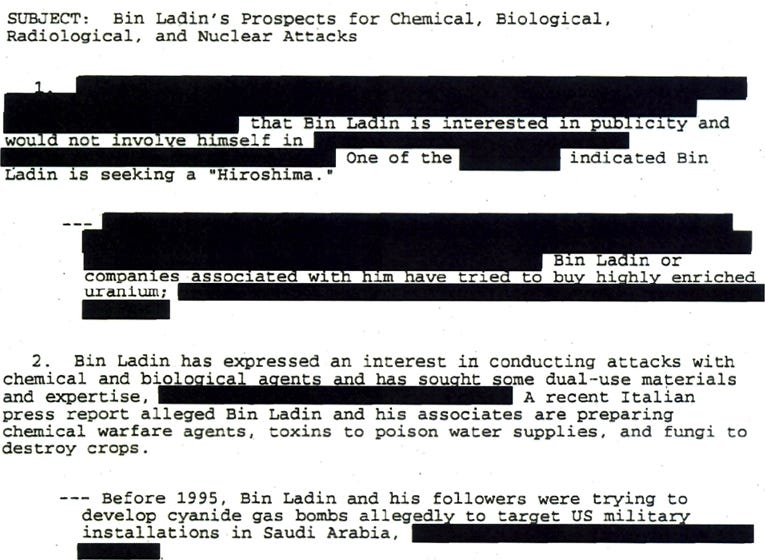
All this is to say: the threat of bioterrorism is real. The Department of Homeland Security was established after 9/11 to protect the United States against terrorist attacks, and the Department of Defense has the added mission of protecting the US homeland as well as warfighters deployed abroad. Intelligence agencies may have information about more specific threats (e.g. the declassified reports on Osama Bin Laden revealed this group sought expertise on biological agents and eventually focused their work on toxins, not infectious biological agents, before ultimately choosing hijacked airplanes as their weapon of choice).
I won’t play policymaker here, so I won’t tell you which organization in the US government should do what, but rather I want to make as concrete as possible the threat of biological agents from hostile non-state actors and how the US government, as of 2016 when the NIAID research was conducted, had a patchwork of agencies working to protect Americans against biological attacks. The US has DHS countering terrorism, the FBI as a law enforcement and investigative arm countering terrorism and weapons of mass destruction, DoD ensuring warfighter preparedness in a world where adversaries consider or actively develop biological weapons and natural outbreaks may be occurring where warfighters are being deployed, and, yes, NIH and NIAID developing medical countermeasures for infectious diseases.
Without knowing what information or rationale was behind the DoD experiment, we can either most cynically assume this aerosolized ebola research was based on the plausible respiratory route literature above and fears of threats and not credible information of threats at the time, or we can most generously imagine a world in which a constant deluge of reports like those declassified by the CIA reveal a world of bad actors considering a world of possible biological agents and deployment methods to cause harm to the United States. One may reasonably feel research is not worth the risk in the absence of credible intelligence of exactly that risk being made abroad, and suddenly that research is very much worth the risk should agencies become aware of a biological threat being actively pursued or developed by our adversaries. Thus, for some who may change their risky research management approach based on the credibility of a threat, it’s possible whether or not this research was worth the risk depends on information we don’t know.
Aerosol challenge studies
During the 1995 outbreak of Zaire ebolavirus, researchers at USAMRIID documented lethal infections in rhesus monkeys challenged with aerosolized ebola.
The information from USAMRIID’s aerosol challenge experiment, along with prior information noted above regarding documented evidence of aerosol transmission in non-human primates, informed the CDC page from the time seeking to educate medical personnel on uncertainty about the route of transmission for ebolavirus. Medical personnel working in austere conditions in Africa to treat patients and contain diseases need to know everything - including uncertainty - about this disease.
When developing medical countermeasures, it’s important to understand what protection they do and do not provide. A condom can prevent the transmission of HIV during sexual intercourse, but it won’t protect against the transmission of HIV from sharing hypodermic needles. That obvious reality for management of HIV transmission applies to situations where routes of transmission are far less obvious.
Aerosol challenge studies are not new. The 1995 aerosol challenge study conducted by USAMRIID has been in the public domain since 1995, yet only today, in 2026, people are being outraged about an aerosol challenge study in 2016. This may reflect a lack of awareness of aerosol challenge studies, or it may reflect a double standard that this research is only bad when Dr. Anthony Fauci is funding it (even if, documents suggest, he wasn’t aware NIAID was funding it until after the study was conducted). Assuming this focus on 2016 research reflects a lack of awareness, let’s expound on aerosol challenge studies.
Remember Y. pestis? Here’s a 2026 paper testing the efficacy of a vaccine in protecting mice against aerosol exposure of Yersinia pestis. Here’s a 2023 aerosol exposure challenge of Nipah virus testing various droplet sizes. A 2016 aerosol challenges of tularemia in mice. A 2007 study of antibiotic efficacy in aerosol challenges of Bacillus anthracis. A 2008 study showing the efficacy of a vaccine against aerosol challenges with both Ebola and Marburg.
I could go on, but the point is aerosol challenge studies have been going on for a long time. These studies have reliably sought to assess routes of transmission and the efficacy of countermeasures to prevent infection or onward transmission for diseases with a pneumonic component or plausible respiratory route of transmission.
Many people were upset with SARS-CoV-2 vaccine mandates, arguing that vaccine studies didn’t account for prior immunity and that vaccines against coronaviruses might reduce the severity of symptoms but not the risk of onward transmission. These are fair points. The only way to test prior immunity would be natural infection, ideally mimicking the route of transmission, which involves… you guessed it… animal studies and aerosol challenge experiments because immunity generated from inhalation of the virus will be very different from immunity generated from an intravenous injection. Additionally, how would one test the efficacy of intravenously injected mRNA vaccines at reducing transmission? Inject a primate with the vaccine and then run an aerosol challenge experiment.
Contextualizing the NIAID-DoD study
Upon hearing news that NIAID funded an aerosol challenge experiment to test the efficacy of an ebola vaccine with DoD, many people are perhaps concerned because of the word “aerosolized”. However, it’s important to temper our knee-jerk reaction to Fauci + Ebola + aerosolized keywords with a more prudent examination of prior research, including aerosol challenges with select agents going back decades.
One is free to believe whatever they want in our society, and my goal throughout my career has always been to be objective in scientific assessments whenever I’m opting into making scientific arguments (while being free to pick my battles and choose which fights I want to fight with science).
Important context is missing from the outrage over the news that Dr. Fauci’s NIAID funded an aerosol challenge study of <bad virus>. That context includes information pointing to a plausible respiratory route of transmission, a history of complex biological threat landscapes that could inform biodefenses as we can now see with e.g. Osama bin Laden himself considering biological weapons, and the long history of aerosol challenge studies that didn’t appear to register as a concern until suddenly Dr. Fauci’s name appeared beside the study.
Suppose this revelation of Dr. Fauci’s involvement has stirred public awareness, and it’s no longer just about Dr. Fauci but rather public will to ban aerosol challenge studies. A free society has a process to do so. I don’t want to tell you what to believe, only what plausible consequences may be.
One is free to, say, ban work on select agents. They will have to contend with the existence of select agents abroad and documented intelligence that people like Osama Bin Laden considered biological weapons. Should adversaries believe the US is especially unprepared to protect against select agents, and should we not have researchers or facilities capable of studying them, our ability to respond to a potentially civilization-ending respiratory transmissible pathogen with a high infection fatality rate will be compromised. Perhaps we’ll buy vaccines from China, since they will likely continue to pursue countermeasures against select agents, meanwhile we’ll be exposed to the downside risk of lab escapes with less of the upside potential of developing - and validating, through challenge studies - the countermeasures that protect Americans from an outbreak from natural or non-natural origins.
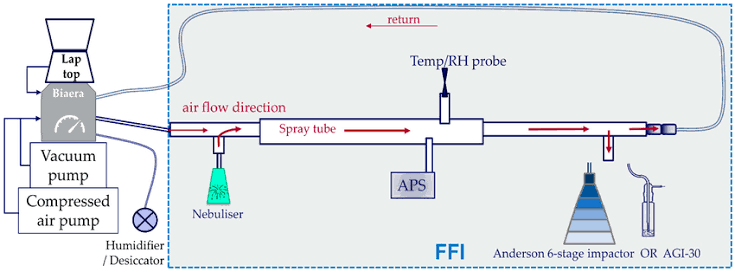
Perhaps we don’t ban select agents research but only ban aerosol challenge studies because we are particularly afraid of aerosols and/or want to avoid any optics that using a small Henderson apparatus commonly used for aerosol challenge studies defines the line between countermeasure research and “bioweapons” (despite this not meeting the international nor US code definitions for bioweapons which focus on intent to use agents to cause harm and not to test the efficacy of countermeasures). Suppose we ban aerosol challenge studies. Vaccines will be developed and challenge studies will focus on all routes of transmission except respiratory routes through aerosols (assuming any challenge studies with select agents are still permitted). The exact studies opponents of COVID vaccines would have wanted - aerosol challenge studies to demonstrate intravenous mRNA vaccines don’t stop respiratory transmission - will not be legal in the United States and so all decision-making about vaccines and vaccine mandates will rely on all-but-respiratory route of transmission evaluation of infectious disease countermeasures.
If we allow aerosol challenge studies for natural pathogens (and there is no evidence yet the 2016 NIAID work was with a non-natural pathogen produced by gain of function research of concern), perhaps limited only to those for which the respiratory route is plausible (since often this isn’t easy to rule out with 100% certainty), then the documented droplet or possible aerosol transmission of Ebola in 1992 primate studies along with health care workers using PPE seroconverting would imply such studies for Ebola would be allowable.
A major unanswered question about the 2016 paper is exactly what strain of ebolavirus was used. If researchers in 2016 used a wild type strain and simply tested the efficacy of a new vaccine, much like the 2008 study linked above, then the research wouldn’t fall under the Dangerous Gain of Function Executive Order since the virus is natural and (I assume) was not passaged in primates to select for novel variants.
Some more details about the 2016 research could clarify the riskiness of this research. It’s possible Dr. Fauci thought the test should be classified because he, too, as an immunologist, may have been ignorant of the extensive use of aerosol challenge studies. Or perhaps Dr. Fauci’s concerns stemmed from the virus being a product of gain of function research of concern, in which case the issue is with dangerous gain of function research and not aerosol challenge studies per se. Or perhaps Dr. Fauci thought the information should be classified because the study was initiated or informed by intelligence of a biological threat (I find this unlikely given Fauci’s apparent disregard for intelligence briefings in the early days of COVID and his evident ignorance of the study when he first learned about it and started asking others in NIAID what was done).
Want to know one final detail? Regulatory agencies like the FDA often require at least two animal models before countermeasures can progress to clinical trials in humans (one rodent, one non-rodent). One can change this and not require animal models, or perhaps not allow primate models, but then the same vaccine hesitancy will be encountered as people express concern that vaccines were only tried in rodents before moving to humans. Such regulatory policy would run the risk of vaccines that cause adverse events in primates skipping over primates to humans, causing adverse events in humans volunteering for clinical trials instead.
The questions of when, where, how, who, and why one might conduct aerosol challenge studies with select agents are fair questions for public deliberation. I hope this context regarding uncertainty about routes of transmission, the complex landscape of biological threats from non-state actors, and the history and use of aerosol studies provides more information to improve the quality of public deliberation on this topic, ideally separating the science policy issue from grudges people may have against Dr. Fauci and either applying criticism fairly across all select agents research, all aerosol challenge studies, and accept the risk that if policies impede studies that have proven valuable in the past then the efficacy of countermeasures may not be well characterized when the bad thing happens.
Or perhaps, in avoiding risk-managed research in US BSL-4 labs, we’ll just buy our countermeasures from China the next time a virus leaks from one of their BSL-2 labs.
Relative risk assessments
Finally, it’s important to contextualize the risks of research relative to baseline and growing risks outside research settings. As of September 2026, the latest Bundibugyo ebolavirus outbreak in Africa has over 8,000 documented cases, far more within-host evolution than has ever occurred in the entire history of published aerosol challenge studies of ebola. The relative risk of filoviral evolution from humans infected from human-human transmission in austere regions of the globe is orders of magnitude higher than research on primates in a BSL-4 lab, especially Fort Detrick where personnel are subject to extensive background investigations to ensure they can be trusted with sensitive materials and information.
Aerosol challenge studies allow the study of respiratory infections without serial passage - absent aerosol challenge studies, we’d only be able to test the efficacy of countermeasures against respiratory infection by housing animals next to one-another in a way that permits only respiratory transmission. We’d need a control group and experimental group, and the control group would need to become infected through passage of only those viruses that left the respiratory tract of inoculated animals. In other words, absent aerosol challenges, the only way to study respiratory transmission would be to inadvertently select for it - aerosol challenges allow researchers to test countermeasures without dangerous gain of function risks.
I’ve worked with live animals infected with pathogens. I am an animal lover so the process was painful for me, yet when I look at a dozen mice or even macaques, I weigh that against the realities of the disease in the world beyond the lab. There are 8,000 people who have contracted ebola in the past year, 3,900 of which have died. As we saw with SARS-CoV-2, developing countermeasures that are safe and effective is not easy, significant preclinical testing is needed to perfect the recipes before attempting human trials. Should the 8,000+ cases of ebola from this outbreak select for a greater role of alternative routes of transmission, especially a respiratory route, the consequences could be catastrophic. Not only does ebola research continue in China and other nations, but ebola outbreaks find their way into immunocompromised populations and populations with limited public health infrastructure, testing the limits of viral evolution with every case, probing the space of biological possibilities for weaknesses in not just the human body, but human countermeasures and human public health systems.
The reality is, biosecurity is exceptionally hard. Even with all our current investments, we’re prolonging human life by curing some major diseases while at the same time losing ground against pathogen evolution through antibiotic resistance and disease emergence. The New World Screwworm’s northward migration back into Texas, the migration of mosquitoes like Aedes aegypti further into the continental United States will increase the incidence of malaria transmission. Hanta, Ebola, Nipah, Hendra, MERS, AMR tuberculosis, and other pathogens are constantly testing our defenses. The baseline risks of infectious diseases with a plausible respiratory route is significant and aerosol challenge studies are how we mimic respiratory transmission without serial passage.
Since immunity is often localized to the site of infection, it’s difficult to find alternative, surrogate systems to test the immunity present in upper respiratory mucosa. We can’t simulate immune systems well, we don’t have good in vitro immune systems that translate well to host immunity as host immunity is determined not only by immune cells and antibodies but by the fluid dynamics of air throughout the respiratory system, the physical structure of the tissues infected, the variability in receptor density, and even things like the pH, temperature, and other environmental factors that vary within the human body. While it may be possible one day to develop surrogate systems that control some of these factors, we will always be uncertain whether or not we’re willing to bet our civilization on results from such simplified systems as the virus in its natural setting may have life history traits and environmental interactions we didn’t anticipate when we created a mini immunological/host-viral zoo in a petri dish.
The relative risks of aerosol challenge studies is often very low for pathogens that are actively circulating in humans, especially for pathogens like Ebola that can kill up to 50% of those infected and therefore pose catastrophic risks to civilization should they cause a full-blown pandemic and we lack countermeasures that protect patients at the site of infection. Given the plausible respiratory path for ebola to cause a full-blown pandemic, the baseline risks of unmitigated emergence are objectively higher than the relative risk of testing vaccines in the efficacy of vaccines of a few macaques in a BSL-4 lab inoculated with Ebola via a device not much different from an asthma inhaler.
One may still oppose aerosol challenge studies on the grounds of animal rights, or the belief that an asthma inhaler + bio defines the line between normal research and bioweapons (even though we’ve articulated the normal reasons why this research is necessary), or the general opposition to Fauci’s support for dangerous gain of function sowing a broader distrust of biodefense efforts. However, policymakers are wise to note the plausible respiratory route of these potentially civilization-ending naturally emerging respiratory pathogens, the history of aerosol challenges, and the relative risks of aerosol challenges to baseline epidemiological processes (including the unmitigated foreign research that continues even if the US unilaterally opts out).
If you want to know what tech can actually protect us, I’ve thought about this problem for 20 years now, have worked on it for many angles, and believe we can win biodefense without introducing intolerable research-related risks. My goal is always to ensure the science is presented objectively, laying all information on the able so policymakers (whose positions I don’t envy) can make decisions based on the latest, best, unbiased information.
Useful context, and the aerosol-challenge literature is the part most people missing the story have never read.
For what it adds to the record: the empirical question has actually been answered, at small scale. A 2008 study vaccinated cynomolgus macaques with a VSV vector carrying the Ebola or Marburg glycoprotein and challenged them three weeks later with a lethal aerosol dose. All vaccinated animals survived with no detectable virus after challenge; every unvaccinated control died within days. The catch is the size, three to four animals per group, one platform, one dose, one timing, never replicated at scale. The countermeasure side is thinner still: interferon-beta after aerosol exposure in macaques prolonged survival but did not prevent death, and AVI-7288 hit 100 percent survival at higher doses but against injection challenge, not aerosol.
So the real gap is not that we lack proof the countermeasures can work against an aerosolized agent. It is that the decisive experiments have N of three. That is an argument about how thin the safety and efficacy margin for policy actually is, which cuts underneath the outrage cycle in both directions.
I ran the question through the literature here: openneedle.ai/q/ebola-protect-nonhuman-primates-against-aerosoli/
I enjoyed your article as usual, but I don't think the problem here is about the aerosolization work of ebola or bad actors from abroad - it's about lack of inter and intra-agency transparency. that's why i think this recent info-nugget is outrageous. none of these agencies or people have won anyone over with their honesty and transparency, and it goes way beyond need-to-know/classification ideas. there's a right way to do everything and if you ask me, we are no where near doing things the right way and it has everything to do with money and power, and nothing to do with actually protecting the country.